This is the fifth and currently last part of the series “Impressions of Our Current AI Usage”, as outlined by the introduction article.
Software development was (and still is) a peculiar profession. The entry bar for participating was very low for decades now. All you needed was a notebook and a brain (coffee was optional). Since we all had more or less the same notebook, it all boiled down to personal skill – we might call it brain power. Those who honed their skills had a competitive advantage. But market demand for software was so high that virtually anybody with an ability to type straight could find a job or even create one’s own job by going freelance.
With the advancements in AI, the old rules begin to shift: Hardware demand skyrockets to a point where local computing is no longer feasible. Your notebook that was able to do most of the work alone is now demoted to an input/output device for a cloud-based AI service. At the same time, personal skill becomes less pertinent because we now all use the same AI services that turn us into virtually the same developer all over the globe. The demand for software is still high (and probably rising), but now the non-tech people can produce a working piece of software on their own, using the exact same tool as a professional developer would. Software gets commoditized, which in itself is a good thing. And because the output of current AI tools has acceptable quality, we might get rid of some of the low quality code that was the inevitable result of exponential growth in the profession.
So, when everybody can just open an AI session and turn into a run-of-the-mill developer, that’s a good thing, right?
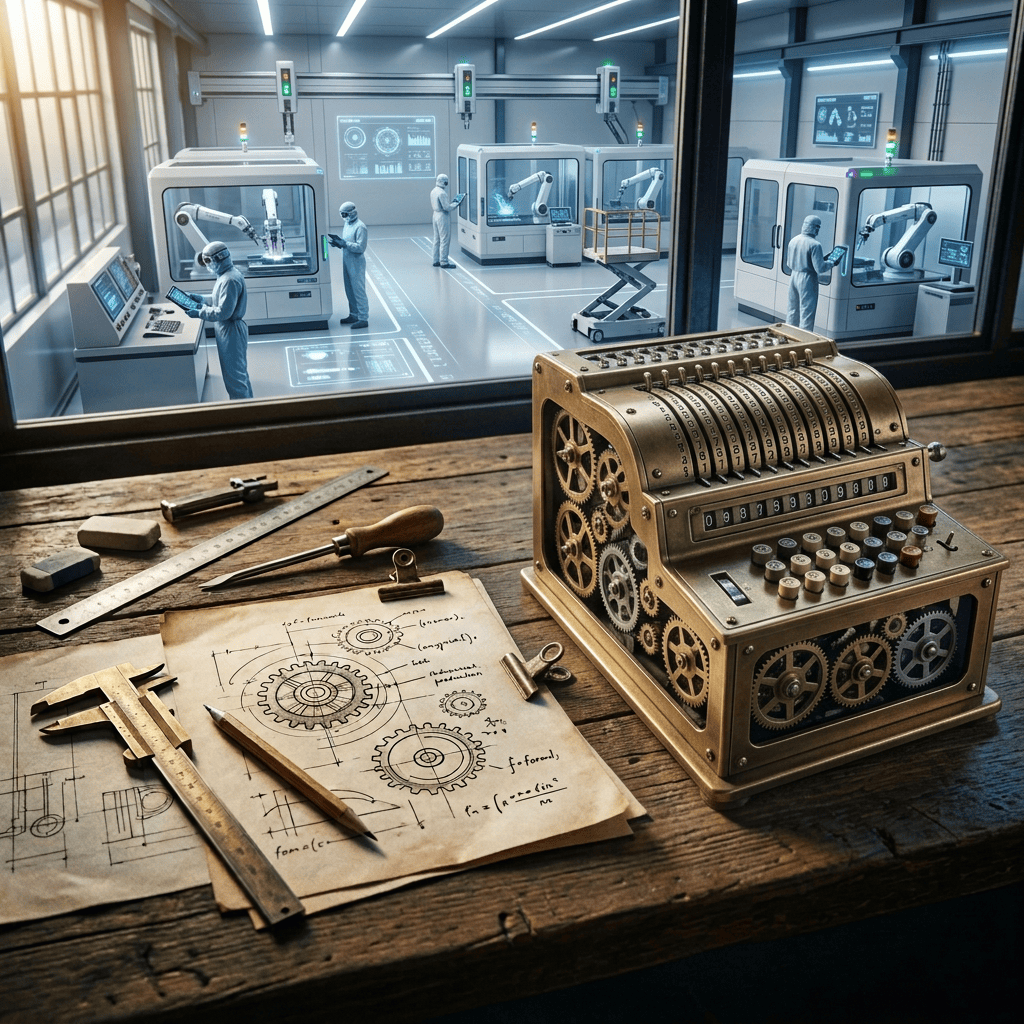
“Yes” to some degree, but there is a big catch that I find underdiscussed for its impact and importance. The foundation of successful work with AI is a powerful inference system. Today, these are LLMs so big that only a few entities in the world can actually create them. The direct consequence is that the means of production are centralized and in direct control of a chosen few. I’m not an economist, but that sounds a lot like the story of the big/rich factory owner with the big machines and the tiny/poor workers that don’t have the resources to build their own factory instead. Which is exactly what software development looks like today: Every team of a few people builds their own software manufacture and achieves competitive results with it.
The catch, to me, is that we give up our economic independence while trying to gain more productivity and convenience. Just like the worker in a shoe factory can handle the machines, but not create a shoe by himself nor replicate the shoe factory. Compare that to a classic shoemaker with his workshop and you see the transformation that we are currently undertaking. The shoemaker won’t scale and might fail his business, but the factory worker is interchangeable and acquires mostly skills that tend to be useless without industry.
The catch is that AI catapults software development as a profession from craftsmanship to industrial work, with all the good and the bad things that accompany such a conversion. If we can see that clearly and govern the process, the good things might overbalance the negatives. If we aren’t aware and caught up in the hype, it’s a game of chance at best.
Can you name articles that talk about this aspect of AI usage? I would like to read them!