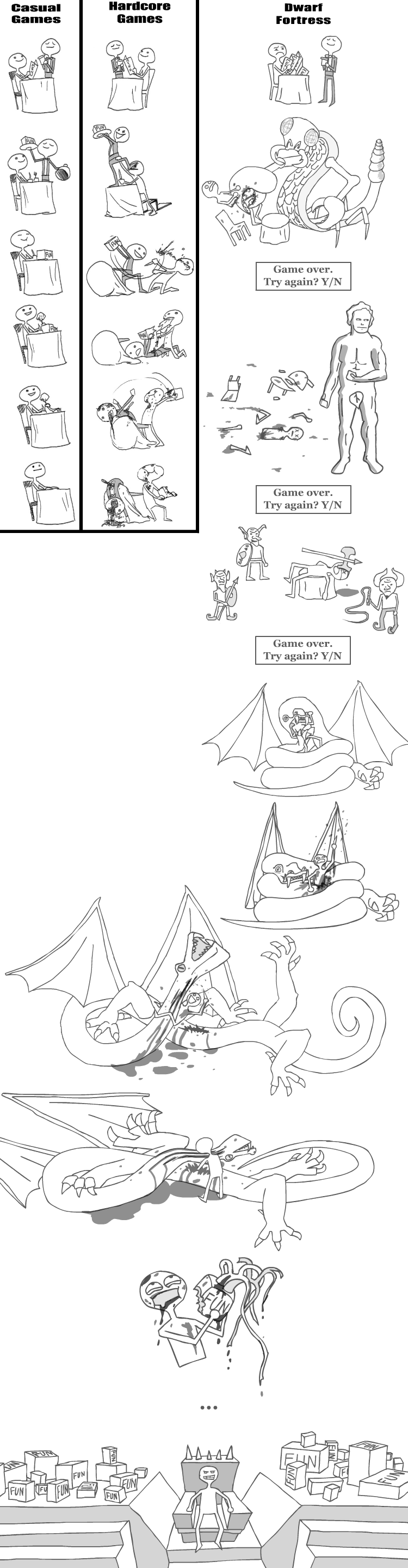
Dwarf Fortress is a peculiar game. It is free to play, developed by two guys that very much depend on donations. It looks like the last 30 years of advancement in computer graphics just didn’t happen, using raw ASCII graphics and an user interface that would have been horrible even in the 1980s.
In Dwarf Fortress, you try to build up a colony of dwarves without giving direct commands to them. You see your dwarves (represented by ASCII characters 0x01 and 0x02 in codepage 850) from above, in a three-dimensional environment consisting of blocks of material like stone or wood. The world is dynamic and simulated with strange, but comprehensible physics. You cannot grow a tree on a stone patch. You can pour water over dirt and get mud. Water flows downwards and will result in FUN if unsupervised. I’ve written fun in capital letters to differentiate the FUN of dwarf fortress from the fun of other games. It really is different.
You can try to imagine Dwarf Fortress being a weird crossover of Minecraft, the Sims and Rogue. Why the Sims? Because each dwarf isn’t just an action figure, but a complex individual with its own beliefs, value system, preferences and aversions. Each dwarf has its own skills and abilities and interacts with other dwarves in a social manner. Dwarf Fortress has a detailed simulation of nature and a detailed simulation of dwarves, down to their individual toes and teeths. It is very possible that one dwarf detests another dwarf so much that he pushes the victim over a cliff if nobody else is around. If the victim survives, you’ll have drama (aka FUN) in your fortress for years.
How can such a game give insights about motivation? Well, let me present you one more aspect of the game: the production system. Our dwarves need food to survive. They need clothes, tools and furniture. Most need some kind of art or decoration. One thing they all can agree to is that they need alcohol. All dwarves are addicted to alcohol so much, they will go crazy without it. And crazy dwarves result in immediate FUN.
But it is our task to govern the dwarves to actually produce these products in sufficient amounts. And this is where the complex production system hits us. In order to produce alcohol, you need to have fermentable plants, a brewery and an empty pot or barrel. To obtain the plants, you can suggest to your dwarves to raise them on farm plots (remember, you cannot give commands) or go out into the wilderness and gather them. Most dwarves really don’t like being outside and will get very unhappy if they are caught in the rain or cold. Yes, the weather is simulated in great detail, too. Water, for example, freezes in the winter.
So, to only have alcohol for your colony, you need one dwarf to prepare the field, one to plant the seeds, one to harvest, one to carry the harvest into the brewery, one to actually brew – and then you discover that you have no pots, so nothing gets stored. You also need to have one dwarf to gather wood or stone and one to produce a pot out of it. This can only be done at the Craftsdwarf’s workshop, so you need to have on built, too.
Did I tell you that dwarves have preferences? If you only grow wheat, you’ll get the finest dwarven beer, but all your wine gourmet dwarves will be unhappy (on a side note: Don’t let them fool you, they drink way too much wine to be called a “gourmet” anymore). You need to produce a variety of alcoholic drinks to give everybody their favorites.
Let’s review the production system one more time. Every dwarf wants to have clothing. Their own clothing! The game simulates clothing down to the left and right sock. Each sock has a quality and can show wear. To produce a sock, you need to obtain some specific plants, process them to obtain threads, weave the threads to cloth, dye the cloth to some color (the dye is the product of another production chain) and then tailor the sock in the Clothier’s shop. The tailor is probably a dwarf that enjoys clothesmaking and is very skilled doing it. He produces socks day in, day out. Some of them are of high quality, maybe even masterpieces (there is the very rare legendary sock that has in-game songs and poems written about it). Others are poor quality, mere trash from the beginning. The tailor knows about the quality of his products and gets a little amount of happiness for each well-done sock and a little amount of unhappiness if the sock was trash.
And here is the first insight about motivation: Motivation doesn’t only come from skill and preferences, but also from good results. If a dwarf is able to produce a good result regularly, he stays happy and motivated. Give him a task where he cannot succeed, no matter the effort, and he will get unhappy. Which will ultimately result in FUN, because the dwarf will try to compensate, maybe by going on a wine gourmet rampage. In the first fortress, a happy tailor produces quality socks for everybody. In the second fortress, a very drunk, unhappy tailor wastes your precious cloths while everybody else walks barefoot and gets unhappy if their toes hurt because of it.
So, motivation is not primarily about performing a task, but achieving a result. A result like crafting a product or, in our case as software developers, releasing a new version of the software with additional features.
Have your dwarves, I mean, your team, produce good results regularly. This is one thing that agile software development processes (and particularly SCRUM) get right: There is a public result at the end of each iteration – if the developers are skilled enough. With lesser skilled developers, you essentially signal them a failure every other week. They are probably trying very hard, but cannot come up with a good enough sock each sprint yet. Make the sprints longer or change your definition of a good result to something more attainable.
Without a clear result, something to hold onto, motivation will fade, too. That’s because uncertainty is stressful for most people. They will compensate for this stress by doing all kind of work, but not the necessary one. If you take a look at the work they do – it gives them measurable results. It may not contribute to the big result at the end of the cycle in any meaningful way, but it contributed to their motivation during the journey.
As a manager, you cannot give your developers direct orders. Or at least, you shouldn’t. If you use suggestions and a setup that facilitates self-organization of the team so that their preferences and needs align with or at least support the goal of the project, you’ll get a highly motivated team that doesn’t fear recurring result examinations, but looks forward to them – because they validate their efforts and give greater meaning to their work. Work that in itself already aligns with their own skills and preferences.
To sum it up: Dwarf Fortress taught me that direct orders are not the way to motivate teams. Creating an environment that anticipates public results often and making sure that the team is skilled enough to meet the expectations (or adjusting the expectations) are key factors to ongoing motivation.
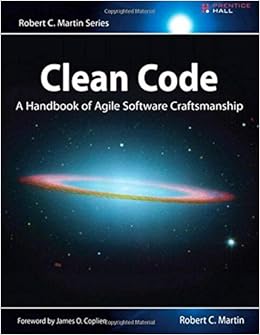 If we were to choose the holy book of software development, we probably couldn’t agree on one or even a dozen titles. And that is a good thing, because there is no one true way of software development. Clean Code by Robert C. Martin would maybe show up in the late contenders. But if we were to choose the most preachy book of software development, well, I have a favorite. This book is so loud that you cannot ignore it. And it is so opinionated that you’re either nodding your head like a heavy metal fan or writhing in averseness. That’s a good thing, too. Because it forces you to think. Your immediate emotional answer needs support by rational arguments and this book will provide you with ample opportunity to gather arguments for your consent or rejection. What this book probably won’t do is leave you unaffected. When it came out in 2008, it was an instant classic. You could spice up any gathering of software developers by making a statement about this book, be it pro or contra. And even today, ten years later, I would say that even if the loudness is deafening, the clarity of the messages makes this book a worthwhile read for every software developer. My grief with it is foremost that for a book called “Clean Code”, some examples of actual code are quite dirty or even plain wrong. Read it with an active mind and it will be a cornerstone of your professional career. But be careful, it seems that currently printed instances have physical quality problems.
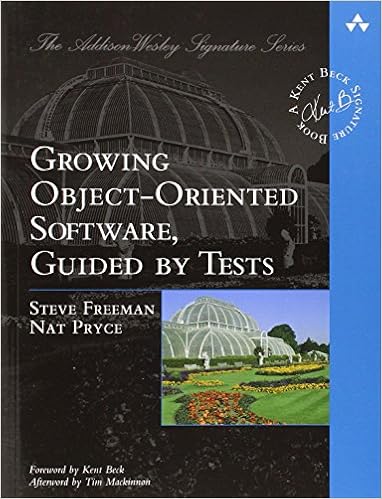 Ever since Extreme Programming hit the (european) scene in 1999, I was curious about Test Driven Development (TDD). I tried automated testing and unit tests whenever I could, read books and later watched videos about the topic. But I never grokked it. It just didn’t work for me and I didn’t even know why. My most feared trap was the one-two-everything syndrome, where you write two simple tests and then have to implement the whole algorithm to fulfill the third test. It was always the third test that broke my rhythm. I tried to exchange experience with TDD practitioners, but their own examples were mostly trivial and my examples always led nowhere (for reference: Try a simple Game of Life in TDD style). I felt dumb and inadequate. When Robert C. Martin (the author of Clean Code) told the developer world that you are either “TDD or not professional” (read
 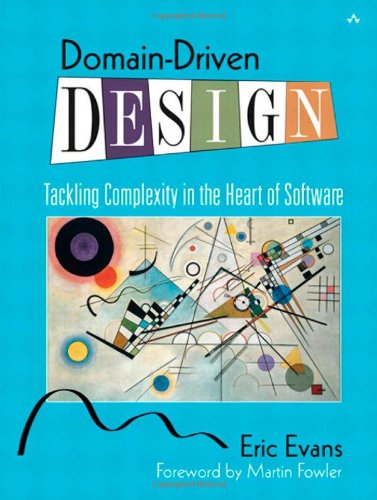 Some years after the GOOS experience, another summer beach holiday was due and as usual, I included a software development book in my luggage. “Domain Driven Design” by Eric Evans came out in 2003 and was praised by some and ignored by most, including me. It took me ten years to finally read it and when I did, it hit me hard. Since my early days as a programmer, I tried to build a meaningful data model with actual types for each program I developed. But it occurred to me that I did it half-heartedly all the time. It shouldn’t stop at a data model, it should be a complete domain model. And for that to work, you need to grok the domain. I review a lot of my code before that insight and always find it funny how I invested effort in my models but more often than not stayed in the technical realm. I cannot say that my programming has changed much from the book, as most concepts meandered through the community since 2003 and were picked up by me mostly under different names. But my software development approach has changed dramatically. I don’t start my thinking from the technical side anymore. And that helps with “business alignment” and all the other magic words that finally have real tangible benefit. And I can now pinpoint when that alignment loosens and employ counter-measures instead of ending up in a special case hell. The best thing was that this book doesn’t require a laptop so I got to sit on the beach that summer with the book in my hands and my head in the clouds. It might be old, but it’s still gold.
 I anxiously waited for this book to be printed. Not because I pre-ordered, but because I held talks, workshops and lectures about the topic before the book was available. And I wanted to make sure that I’m not telling nonsense. But Robert C. Martin took his time and delayed the deadline month after month. Then, nearly a year later, the book reached the stores in late 2017. So I would have to wait for my winter holiday to read it. I couldn’t wait and began right away. The book is a slow burner and feels like a long introduction. By the time the central proposition is revealed (and yes, it reads like good unagitated spy thriller at times), you’ve probably already figured it out yourself. And that’s a good thing in my mind, because it feels as if it was your idea and Uncle Bob is just there to nod and congratulate you for your intellect. This book is so many times less preachy than “Clean Code”. If we compare spy thriller literature, this is a John le Carré while Clean Code would be an Ian Fleming (James Bond). “Clean Architecture” is not about programming, it talks about software architecture, a topic that I missed greatly in my early developer years. I liked this book so much
  All the other books talk about different aspects of programming, software development or related technical topics. But what about a book that raises a simple question: “Why is IT technology so complicated?”. And gives the answer: “Because we want it this way.”. That’s actually true. In a world without most of the restrictions of the physical world, we were unable to build solutions that actually helped us and came up with machines and software that overwhelmed most people. It needed a whole new generation of “digital natives” until concepts like internal operation modes (e.g. insert vs. overwrite) were intuitively understood. Not because they became simpler, we were just used to the complexity. Alan Cooper described the problem and gave at least hints for solutions in 1999, nearly 20 years ago. That’s the timespan of a generation. This book made me think hard about the status quo I silently had accepted with technology. It just was like it was, what else could there be? If I reveal a tiny bit of different approaches I can think of now, I’m often confronted with incomprehension. Not because I’m particularly clever and everyone else is dumb, but because there seems to be no problem if you’ve grown accustomed to it. If you want to see some of the pain other (older) people feel when interacting with technology and software, read this book. It is an eye-opener to common problems no software developer ever had. It is the first step into the world of UX (user experience), where it’s not as important if the developer feels alright but if the user feels at least adequate. It might be a classic and feel a bit outdated and weak on the solution side, but to understand the problem properly is the first step to appreciate possible answers. And Alan Cooper didn’t stop there. Read his
 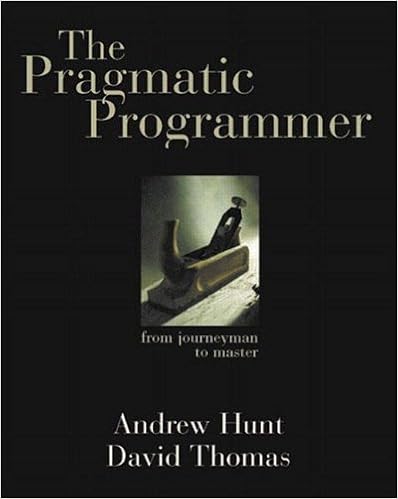 More by chance, my co-founder stumbled upon “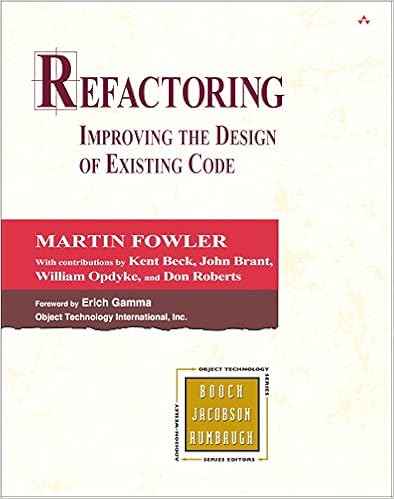
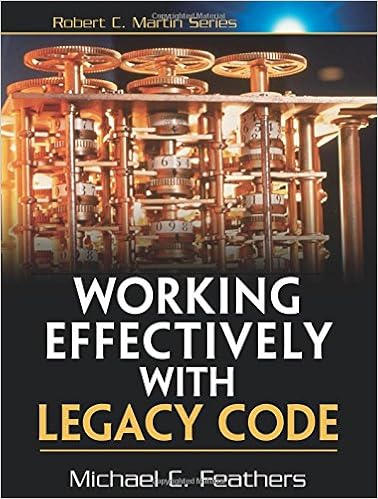 In 2004, Michael Feathers wrote a book that contains his 20+ years of experience with software development and named it “
 Martin Fowler was a very productive author in the late nineties. I’ve read most of his books from this period, if maybe with a few years delay. “
 Since the late 80’s, Tom DeMarco and Timothy Lister wrote one book after the other. Each book describes a common business-oriented problem and at least one working solution for it. And yet, the very same problems still persist in the business world. It’s as if nobody reads books. “