Simple C++11 – Part II – Class declarations

In the previous part, I’ve shown my guidelines for setting up compilation units. When writing simple application code with C++11, either classes or free-functions should be your main building blocks. Therefor, in this part, I will focus on what to look out for when writing class declarations.

While templates can be very useful, they do not scale well as the code base gets larger. Metaprogramming or other niche styles have their places, too, but I like to look at those as a means to create language extensions rather than principal implementation tools.

Avoid inline implementations

…especially in header files. It can be tempting to write classes solely in the header file. In fact, it has almost become a sign of quality for parts of C++ code to be header only. But this scales badly in most cases, and evolving such a code-base will result in a dramatic explosion of compile times. Always splitting classes into a declaration and definition acts as a first-level compile- firewall and dependency-breaker. Users of your class no longer need to worry about changes in the implementation of the member functions of that class. Note that those changes are often indirect: a change only affects a class that is used in the implementation of your class’ member functions. By splitting the declaration and definition, users of your class do not have to be recompiled.

But why stop at the compiler? The same argument holds for programmers. If you start to split interface and implementation on this level, you automatically provide ‘reader-firewalls’ as well. By just providing a clean header file, you are giving readers sort of a manual for your class. No need to look at the implementation at all, if the interface is well-defined.

Inline code definition is also the main reason against excessive use of templates. Yes, they grant a lot of flexibility, but you pay a hefty price which needs to be justified by an enormous reduction of complexity elsewhere. In general, templates are a bit too powerful for their own good, which is why they need extra moderation.

Always declare implicit functions

Implicitly declared functions seem comfortable, but they have a few implications that are hard to understand. First of, if an implicit function gets generated for your class, it will be generated as inline. This means that the implementation becomes a dependency to all users of your class. This can have very subtle effects such as this:

#include <vector>
class Entry;

class EntryManager {
public:
  EntryManager(EntryGenerator& generator);
  int getEntryCount() const;
  std::string getIDForEntry(int index) const;
private:
  std::vector<Entry> mData;
};

On the surface, it looks like there should be no dependency (other than the name) on MyEntry when including this header. But there is!
The destructor is not declared so it will get generated – as inline. Because deletion of a vector requires the held type to be complete, any place that needs to be able to destruct a MyEntryManager also needs to know how to destruct MyEntry, which is not intended at all. Remember there’s a total of six functions that can be implicitly generated! Because of that, there are analogous problems for copy-construction, assignment, move-construction and move-assignment.

To avoid these problems, either delete the function explicitly in the header, default it in the implementation file, or actually implement it. You rarely need to do the latter, so I advise to default all the ones you need, and delete the rest:

#include <vector>
class Entry;

class EntryManager {
public:
  EntryManager(EntryGenerator& generator);
  EntryManager(EntryManager const&)=delete;
  EntryManager& operator=(EntryManager const&)=delete;
  EntryManager(EntryManager&& rhs);
  EntryManager& operator=(EntryManager&& rhs);
  ~EntryManager();
  int getEntryCount() const;
  std::string getIDForEntry(int index) const;
private:
  std::vector<MyEntry> mData;
};

And somewhere in the implementation file:

EntryManager::EntryManager(EntryManager&& rhs) = default;
EntryManager::~EntryManager() = default;
EntryManager& EntryManager::operator=(EntryManager&& rhs) = default;

This has another nice side effect because the vector-template gets instantiated into that object file and does not “bloat” all use-sites.

Exactly one public function and one private data section per class

..starting with the public section. This is where you address the next programmer that has to read your class. And it should be the only place for him to look.

I avoid private member functions because they cannot be tested easily and can add hidden compile-time dependencies to a project. Why should a user of your class recompile if you change an implementation detail? For small and trivial implementation helpers, the unnamed-namespace in the implementation file is a much better place. If those helpers become larger or more complex, it is a better idea to implement them in a collaborating class, which can be tested and reused.

Protected member functions split your interface to two parts, one exclusively for derived classes and one for everyone (including derived classes). This is very rarely needed, and in almost all of those cases, a separate interface will scale better (although it is slightly harder to implement).

Either an interface or an implementation

So far, I have left inheritance out of the picture and only talked about concrete classes. Inheritance is actually rarely needed, composition often suffices. But if it is needed, make sure that a class is either concrete and final (implementations), or has a complete and minimal set of pure-virtual member functions (interfaces). This will result in shallow hierarchies and easily understood interfaces. Remember that inheritance is not a tool for sharing code from the classes you implement, but for the code using those classes – i.e. where the Liskov Substition Principle holds.

Now it gets really easy to implement new classes in the hierarchy: Just implement all the functions in the interface. No more questioning whether to leave the default behaviour or override. You will also automatically tend towards clearer separation of components – things that need to be polymorphic move to the interface, other  functionality merely uses it.

This pattern is useful even when polymorphy is not needed. Such small interfaces devoid of any implementation detail can act as another compiler firewall. Collaborators can work with just the interface and do not have to be recompiled when the implementation changes. Also, the interface can be implemented for mock or fake objects in testing.

Conclusion

This concludes the second part of the series. I originally intended it to be about how to write a whole class, but that would have been too much to digest for one post. I am well aware that some of these guidelines can stir quite the controversy in the C++ community. For example, declaring the implicit functions seems to be in conflict with the recently popular rule of zero. Scott Meyers had similar concerns, but does not quite touch the inline aspect.

For me personally, these guidelines have helped tremendously, especially when scaling to bigger code-bases. But as before, I am curious what others are thinking about this!

Meet my Expectations!

A while ago I came across a particulary irritating piece of code in a somewhat harmlessly looking mathematical vector class. C++’s rare feature of operator overloading makes it a good fit for multi-dimensional calculations, so vector classes are common and I had already seen quite a few of them in my career. It looked something like this:

template <typename T>
class vec2
{
public:
  /* A few member functions.. */
  bool operator==(vec2 const& rhs) const;

  T x;
  T y;
};

Not many surprises here, except that maybe the operator==() should be a free-function instead. Whether the data members of the class are an array or named individually is often a point of difference between vector implementations. Both certainly have their merits. But I digress…
What really threw me off was the implementation of the operator==(). How would you implement it? Intuitively, I would have expected pretty much this code:

template <typename T>
bool vec2<T>::operator==(vec2 const& rhs) const
{
  return x==rhs.x && y==rhs.y;
}

However, what I found instead was this:

template <typename T>
bool vec2<T>::operator==(vec2 const& rhs) const
{
  if (x!=rhs.x || y!=rhs.y)
  {
    return false;
  }

  return true;
}

What is wrong with this code?

Think about that for a moment! Can you swiftly verify whether this boolean logic is correct? You actually need to apply De Morgan’s laws to get to the expression from the first implementation!
This code was not technically wrong. In fact, for all its technical purposes, it was working fine. And it seems functionally identical to the first version! Still, I think it is wrong on at least two levels.

Different relations

Firstly, it bases its equality on the inequality of its contained type, T. I found this quite surprising, so this already violated the POLA for me. I immediately asked myself: Why did the author choose to implement this based on operator!=(), and not on operator==()? After all, supplying equality for relations is common in templated C++, while inequality is inferred. In a way, this is more intuitive. Inequality already has the negation in its name, while equality is something “original”! Not only that, but why base the equality on a different relation of the contained type instead of the same? This can actually be a problem when the vector is instantiated on a type that supplies operator==(), but not operator!=() – thought that would be equally surprising. It turned out that the vector was only used on built-in types, so those particular concerns were futile. At least, until it is later used with a custom type.

Too many negations

Secondly, there’s the case of immediately returning a boolean after a condition. This alone is often considered a code-smell. It could be argued that this is more readable, but I don’t want to argue in favor of pure brevity. I want to argue in favor of clarity! In this case, that construct is basically used to negate the boolean expression, further obscuring the result of the whole function.
So basically, the function does a double negation (not un-equal) to express a positive concept (equal). And negations are a big source of errors and often lead to confusion.

Conclusion

You need to make sure to make the code as simple and clear as possible and avoids any surprises, especially when dealing with the relatively unconstrained context of C++ templates.  In other words, you need to make sure to meet the expectations of the naive reader as well as possible!

Quantities in C++ and User Defined Literals

Some weeks ago one of my colleagues wrote about the use and implementation of physical quantities in C#. If you are writing an application in the technical or scientific domain chances are high that you should adhere to his advice and use a suitable representation of physical quantities instead of plain primitive values. Good news is that you can easily port/implement quantities to modern C++ or use existing libraries like Boost.Units.

With C++11 you can go one step further adding the so called User-defined literals. This feature allows definition of suffices for integer, floating-point, character and string literals to produce objects of the desired (quantity) type. While there is nothing wrong with using the multiplication operator to produce quantity instances user-defined literals provide just a little bit more syntactic sugar:

// Your quantity classes...
class Angle;

// operators for user-defined literals
constexpr Angle operator "" _deg(long double deg)
{
    return deg * degrees;
}

constexpr Angle operator "" _deg(unsigned long long int deg)
{
    return deg * degrees;
}

constexpr Angle operator "" _rad(long double rad)
{
    return (rad * 180 / M_PI) * degrees;
}

// add more if needed

This allows you to write code like:

Angle rightAngle = 90_deg;
Angle halfCircle = 3.141_rad;
Angle fullCircle = 4 * 90_deg;

In many cases this looks a tad simpler and cleaner than using the multiplication operator in conjunction with a unit especially in more complex formulas. There are a few things about quantities and user-defined literals in C++ I find noteworthy:

  • These literals are only supported for the built-in literal types. If exact calculation and better than floating-point precision is needed, raw literals (instead of the explained cooked) and decimal libraries have to be used. For raw literals you have to parse the characters of the literal yourself.
  • User-defined literals need to be prefixed with _ to avoid namespace clashes with current and future standard library literals. There are for example some nice literals for durations in the <chrono>-date and time standard library.
  • If you implement your literal operators as constexpr they will be evaluated at compile time meaning slightly increased compile times and zero runtime overhead.

For some more in-depth discussion of user-defined literals have a look at the blog series from Andrzej Krzemieński.


Physical Quantities in C#

Scientific applications usually perform lots of calculations with physical quantities. If you do not represent them properly in your code you run the risk of mixing them up. For example, it’s easy to add a value in meters to a value in kilometers if you simply work with variables of primitive types like double or decimal. It can help to encode the unit in the variable name, e.g. massInKilogram, but it’s much better to let the type system handle it.

So here’s some C# code which models a generic physical quantity and its unit:

public abstract class Quantity<T> where T : Quantity<T>, new()
{
    private decimal value;

    public decimal In(Unit<T> unit)
    {
        return value / unit.Factor;
    }

    public string ToStringIn(Unit<T> unit)
    {
        return string.Format("{0} {1}", In(unit), unit.Text);
    }

    public class Unit<Q> where Q : Quantity<Q>, new()
    {
        public decimal Factor { get; private set; }
        public string Text { get; private set; }

        public Unit(string representation, decimal factor)
        {
            Text = representation;
            Factor = factor;
        }

        public static Q operator *(decimal value, Unit<Q> unit)
        {
            var quantity = new Q();
            quantity.value = value * unit.Factor;
            return quantity;
        }
    }
}

With this base class we can easily implement some quantities:

class Duration : Quantity<Duration>
{
    public static readonly Unit<Duration> Millisecond = new Unit<Duration>("ms", 1e-3M);
    public static readonly Unit<Duration> Second = new Unit<Duration>("s", 1M);
    public static readonly Unit<Duration> Minute = new Unit<Duration>("min", 60M);
}

class Mass : Quantity<Mass>
{
    public static readonly Unit<Mass> Milligram = new Unit<Mass>("mg", 1e-3M);
    public static readonly Unit<Mass> Gram = new Unit<Mass>("g", 1M);
    public static readonly Unit<Mass> Kilogram = new Unit<Mass>("kg", 1e+3M);
}

And this is how they are used:

var t = 30 * Duration.Second;
Console.WriteLine(t.ToStringIn(Duration.Minute));
Console.WriteLine(t.ToStringIn(Duration.Second));
Console.WriteLine(t.ToStringIn(Duration.Millisecond));

var m = 10 * Mass.Gram;
Console.WriteLine(m.ToStringIn(Mass.Milligram));
Console.WriteLine(m.ToStringIn(Mass.Gram));
Console.WriteLine(m.ToStringIn(Mass.Kilogram));

The Unit class uses operator overloading to overload the multiplication operator. Instead of calling a constructor directly we use multiplication with a unit to create new instances of a quantity.

The type system prevents nonsense like this:

// does not compile
(10 * Mass.Gram).In(Duration.Minute);

You will probably want to overload more operators of the quantity classes depending on your use case. You can also overload operators to produce instances of new quantities:

Velocity v = (3.5 * Length.Kilometer) / (10 * Duration.Minute);

class Velocity : Quantity
{
    public static readonly Unit MeterPerSecond = new Unit("m/s", 1M);
}

class Length : Quantity
{
    public static readonly Unit Meter = new Unit("m", 1M);
    public static readonly Unit Kilometer = new Unit("m", 1e+3M);

    public static Velocity operator /(Length s, Duration t)
    {
        return (s.In(Length.Meter) / t.In(Duration.Second)) * Velocity.MeterPerSecond;
    }
}

If you do not want to hand craft your quantities you might want to check out existing libraries for working with quantities like QuantityTypes.

Software development is code organization

The biggest problem in developing and maintaining software is understanding code. Software developers should get good training in crafting code which can be understood. To make sense of the mess that is code we need to organize it.

The biggest problem in developing and maintaining software is understanding code. Software developers should get good training in crafting code which can be understood. To make sense of the mess we need to organize it.

In 2000 Edsger Dijkstra wrote about our problems organizing and designing software:

I would therefore like to posit that computing’s central challenge, “How not to make a mess of it”, has not been met. On the contrary, most of our systems are much more complicated than can be considered healthy, and are too messy and chaotic to be used in comfort and confidence.

Our code bases get so big and complicated today that we cannot comprehend them all at once. Back in the days of UNIX technical constraints led to smaller code. But the computer is not the limiting factor anymore. We are. Our mind cannot comprehend what we create. Brian Kernighan wrote:

Everyone knows that debugging is twice as hard as writing a program in the first place. So if you’re as clever as you can be when you write it, how will you ever debug it?

Writing code that we (or other developers) can understand is crucial. But why do we fail?

Divide and lose

Usually the first argument when tackling code is to decouple it. Make it clean. Use clean code principles like DRY, SOLID, KISS, YAGNI and what other acronyms you know. These really help to decouple. But they are missing the point. They are the how not the why.
Take a look at your codebase and tell me where are the classes which constitute a subdomain or a specific feature? In which project or part do they live?
Normally you cannot. We only know how to divide code by technical aspects. But features and changes often come from the domain, not from the technology.
How can we understand our creations when we cannot understand its structure? Its architecture? How can we understand something we do not see.

But it does work

The next argument is not much better. Our code might work now. But what if a bug is found or a new feature is about to be implemented? Do you understand the code and its structure? Even weeks, months or years later? Working code is good but you can only change code reliably that you understand.

KISS

Write simple code. Write simple and small methods. Write cohesive classes. The dream of components. But the whole is more than the sum of its parts. You can write simple classes but the communication and threading issues between them can be very complex. Even if the interfaces are sound and simple. Understanding a simple class can be easy in isolation. But understanding a system of simple classes can be difficult and complex. Things are complex. Domains are complex. We cannot ignore that.

Code as an interface

When writing code we have to take the reader and the domain into account. Treat code as an interface. An interface to the system and the domain. It is an opinionated view of the world. The computer does not care about the code we use. Just like the printer who prints our favorite book. But the reader does.
This isn’t just nice thinking, understanding code is key to successfully crafting and changing software.

The typography of source code

All of our source code has typical (macro) typographical properties. This structure can tell us something about the language used, about the type of artifact and even about the composition of the individual parts of a class or file itself.

Take a look at the following source code, can you guess which language this is written in?

It’s CSS. CSS has a typical layout with a minimal indentation depth where a group of selectors embraces lines of attribute / value pairs. Take a look:

As with the example above all of our source code has typical (macro) typographical properties. This features can tell us something about the language used, about the type of artifact and even about the composition of the individual parts of a class or file itself.
Here’s another typical file in a common language:

In this case it is a Java class. It reveals itself by its block of imports at the top (1). The class declaration (2) is rather long probably due to generics. The typical block of field declarations (3) starts the class body. Quickly a short constructor follows (4). It is too short but has parameters so it is a convenience constructor. The real constructor is next (5). Here we see the constructor is too long. It does so much we almost take it for a normal method. At (6) we see parameters for a method call one on each line. The slight change in indentation at (7) indicates an inner class. The block at (8) confirms the inner class: here parameters from the outer class are referenced by prefixing it with OuterClassName.this.
Even subtle things like annotations (9) can be seen at macro level.

Let’s compare two object oriented languages one is Java, the other one Ruby.

Several things can be noticed (besides the Java version is much longer than the Ruby one). First the Java block of imports is missing in Ruby. The field block seems to be small in Ruby but another big block follows in the middle. The Ruby class shown here is a Rails domain class. The block in the middle contains the associations (has_many and friends). Looking closer one can glimpse that the closing part of the methods seems a bit thicker in Ruby (Ruby closes the method with end whereas Java closes with }). But besides the difference a similarity is also there: both classes have a couple of short methods near the bottom.
Even within one language and one framework classes with different purpose have different shapes. Seeing a Rails model and a controller side by side shows some interesting patterns.

While controllers have a block at the end of the class (which is for permitting request parameters), model classes have blocks of scope declarations and associations typical at the center. Whereas model methods are short in both dimensions, the controller methods have a level of indentation (which is a typical if which checks for the success or failure of the operation).

But why does this all matter? The first thing when we look a block of text is its (macro) structure. Typical patterns can help us to identify the type of class or language. Inconsistencies could be bugs or parts which were difficult to write. Kevlin Henney advocates in his talk Seven Ineffective Coding Habits Of Many Programmers for formatting techniques that are stable and produce a minimal set of alignments. Because:

You convey information by the way you arrange a design’s elements in relation to each other. This information is understood immediately, if not consciously, by the people viewing your designs.

Daniel Higginbotham, http://www.visualmess.com/

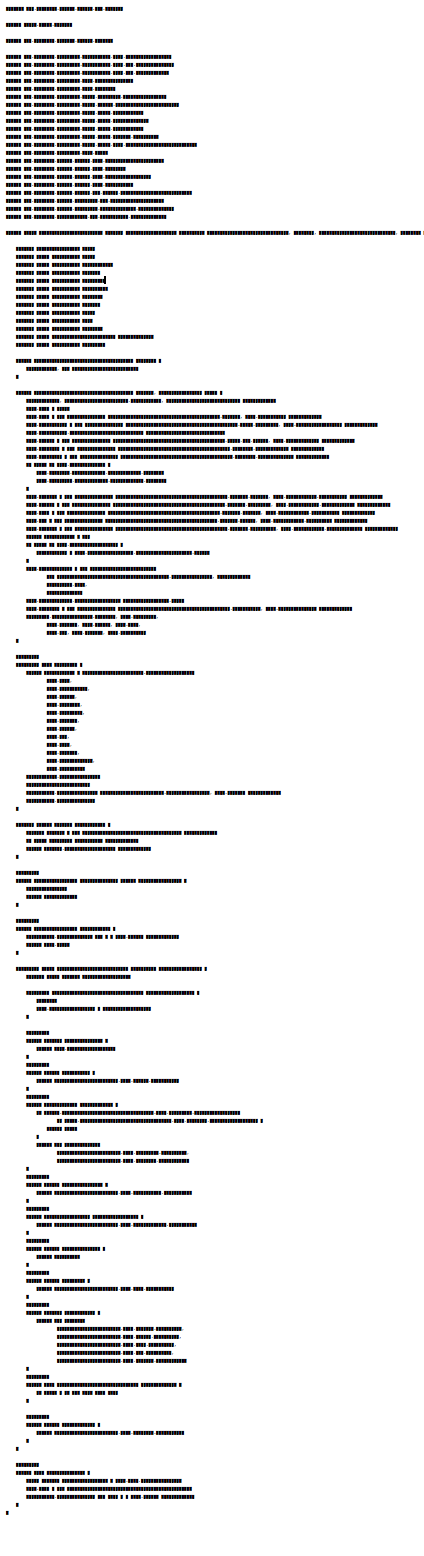
I think many more things can be seen by looking at the macro level but for now I leave you with another picture of a sourcecode of a well known language. Can you guess what it is?

Managing C++’s complexity or learning to enjoy C++

Disclaimer

I have never been a big fan of C++ coming from C and Java. C is a nice little language and yet offers many means of code structuring. Java offers many object-oriented features and makes the use of them quite easy. Together with garbage collection, a huge ecosystem and powerful IDEs it lets you work on the problem at hand at quite some speed. C++ on the other hand is a huge language with myriads of concepts and supports almost all features of C. So at first it seemed to me as worst of all worlds. Similar to Scala which is also a quite large multi-paradigm language (that I happen to like).

Why and how use C++ then?

On my job I have to work with C++ regularily. Diving deeper into the language, learning STL and modern code styles I am starting to actually like C++. In addition to the runtime-efficiency (that you can get with C too, and to some extent even with Java) C++ provides many means for robust programs and nice abstractions. Using idioms like RAII, the Algorithms library, smart pointers and operating mostly on values takes away most of the resource management and memory buffer handling hassle. But since C++ is so large and supports so many programming styles I think the following measures really help to build robust and maintainable programs and enjoy using C++:

  • Establish rules for your code, e.g. no naked pointer, no friend, no multiple inheritance, use of exceptions etc. That way you create an idyllic world where you develop most of the time and the number of pitfalls is greatly reduced. Your rules may change like you see them fit but adhere to them and do not change them lightly.
  • Protect your code from legacy/3rd party code and libraries using anti-corruption layers, wrappers and adapters. They are means to preserve your idyllic world and make life there easier. Don’t let the null pointers slip in.
  • Use modern idioms and APIs, as modern as your compiler/environment supports them (see gcc c++11 support, Visual Studio etc.). Like in other programming environments take special care regarding your dependencies! Manage them carefully.
  • Understand and learn to use STL containers, smart pointers, RAII, algorithm, streams etc. There are plethora of concise, clear and robust solutions for your everyday problems without the need of iterating over vectors with and index variable…
  • Build classes/components that manage their resources and provide easy to use interfaces. Use type-rich interfaces and work mostly with values. The compiler will help you a lot more than with a pointer-heavy and mostly primitives style. Treat delete (outside of a destructor) and naked new as smells and restrict them to areas where you cannot find a way around them.

Where is the fun for me?

I find it rewarding and satisfying carefully crafting these easy-to-use components and improving them over time. Adding some const statements, deciding between pass-by-value or pass-by-reference, making the components thread-safe, finding the right balance between using classes or free floating functions, private inheritance etc. You can really do a lot have the compiler as a friend instead of a dreaded enemy and let it guarantee many things programmers tend to do wrong. Build your components so that they are hard to use in a wrong way. Then there are really cool features like call_once library support, closures (aka lambda functions) and type inference with the auto keyword, user-defined literals and many more.


TANGO device server architecture

In my previous post I explained the basics of TANGO and why you probably want to use TANGO for development of a distributed system. Now I would like to explain how to build and design a TANGO device server. There are several best practices and even a comprehensive and ever evolving guide you should definately have a look at.

General Approach

I like to think about TANGO as a thin wrapper around some software object. That means almost all logic and hardware/platform dependent stuff is implemented in the software object which should provide all services the TANGO wrapper needs. Usually you will design an opinionated library supporting your use cases and encapsulating platform, hardware and driver issues and leaves out the stuff you do not need.

TANGO Server - ArchitectureThe opinionated library has no dependencies on TANGO and can be use in different clients independently of TANGO. The TANGO device classes mostly delegate to the library and manage just the TANGO specific things like device state, synchronisation, allowed methods and so on.

TANGO Server Architecture

As said before the TANGO device that makes use of the software component developed with TANGO in mind contains only short methods doing parameter conversion and some TANGO book keeping and life-cycle-management. The design of the server itself is an interesting part in itself though. Often it pays off to implement several devices in one (or more) TANGO servers that perform different tasks and provide special interfaces to their clients.

For example, a multi-axis motor controller could export one device per axis, so clients can move the axes independently in a natural fashion by denoting the respective axis by its device name. Alongside there may be some controller device that provides access to controller functionality not specific to a single axis like a stop all axes command. Sometimes it is helpful to let the axis devices talk to the controller and not directly to the component you are trying to expose via TANGO. That way you can for example synchronise access to the component with TANGO framework functionality on the controller device.

For imaging systems like CCD cameras or other detectors additional devices for image transformations, persisting the images or additional buffering may be a good decision. Such devices can be made largely independent of the actual hardware or imaging system which makes for nice reuse and plug-able functionality.

So it is good to think about the different tasks and aspects your TANGO server should perform and separate them into specialised devices. That should make each device itself clearer and enables specialised service interfaces for different clients. Your devices become easier to use and many parts may be even reusable. We try to standardise on device interfaces every time we identify general abstractions. That makes it much easier for the clients to work with your exposed TANGO devices.

Don’t ever not avoid negative logic

If you want to be nice to people with a challenged relationship with boolean logic, try to avoid negative formulations and negations.

I start this post with a confession: I’m not able to discern true from false. I wasn’t born with this inability, it got worse over time. The first time I knew I have this problem was in driver’s school when my teacher told me that most people cannot switch from forward to backward drive and still tell left from right. Left and right are the same to me ever since, even in forward motion. When I was taught boolean logic, my inability spread from “left and right” to “true and false” and led to funny results in some tests, especially multiple choice questions with negative statements. But my guess is that I’m not alone with this problem.

No negations

So I’m probably a little bit over-sensitive about this topic, but that should only make the point clearer: Don’t obscure your (boolean) statement with unnecessary layers of negation. See? I just did it, too. Let me rephrase: Always state your boolean logic without negation, if possible.

It’s really easy for us super-clever programmers to juggle several dozen variables in our head and evaluate any boolean statement on the fly by reading it once – regardless of parenthesis. Well, until it’s not. The thing about boolean logic is that you can’t be “unsure”. It’s only ever “true” or “false”, and just by wild guessing, you will be right about it half the time – try that with basic numerical algebra! So even if the statement looks daunting, you have a fifty-fifty chance of success.

Careful crafting

For me (and probably all people with “boolean disability”, as I call it), every boolean statement is a challenge. So you can be sure that I put maximum effort in succeeding. I write my statements carefully and with great emphasis on clarity (this blog post only covers one aspect). I re-read them several times, sometimes aloud (to my imaginary rubber duck). I thoroughly test them – most statements are factored into their own method to achieve direct testability. And I try them out before committing. Still, there is a valid chance that my boolean disability didn’t magically disappear when I wrote my unit tests and I happily asserted that the statement always has to decide the right things in the wrong way.

By painful introspection about the real nature of my boolean disability, I discovered a great easement: If a statement doesn’t flip everything on its head by negation or negative formulation, I can actually follow through most of the time. Let me rephrase for clarity: If a statement uses negation, it is hard for me to follow. And I guess everyone has a personal limit:

ow_owl

A workaround

The workaround for my boolean disability is really easy: Express the statement like it really was meant in the first place. Express it without “plot twist”. Instead of

if (!string.isEmpty())

try something like

if (string.hasContent())

Disclaimer: I know that the Java SDK (still) doesn’t provide this method. It was just an example.

A real-life example

A real-life example that caused us some troubles can be found in the otherwise excellent Greenmail plugin for Grails. In the configuration, you can set the property

greenmail.disabled = true

to disable the mail server that otherwise would start automatically. The positive formulation would be

greenmail.enabled = false

To tell the full story: The negated formulation was probably chosen to simplify the plugin’s implementation in Groovy. The side effect of this short-cut is that you can’t state

greenmail.disabled = false

and be sure that it will start the mail server. In fact, it won’t. As a developer challenged by boolean logic, this issue gave me nightmares.

The three-state trap

Using this rule as a guideline for boolean statements will also prohibit that you fall into the “three-state trap”. Imagine a Person object with the method

boolean isOlderThan(Person other)

But you want to know if a person is younger than another, so you just negate the result:

if (!personA.isOlderThan(personB))

just to be clear, following the rule of “no negations”, you would’ve written:

if (personA.isYoungerThan(personB))

which isn’t quite the same! If both persons are of equal age (the “third state”), the negated statement returns true (if I evaluated it correct!), whereas the last statement gives the correct answer (false – not younger).

Use as a guideline

Don’t get me wrong: Avoiding negations isn’t always possible or the best available option. This isn’t a law, it’s a guideline or a rule of thumb. And just because some complex boolean statement is free of negations doesn’t make it acceptable automatically. It’s just a tiny step towards pain-free boolean statements. And that’s a bad thing… NOT.

Should I test this?

Writing software is hard, writing correct software is even harder. So everything that helps you writing better or more correct software should be used to your advantage. But does every test help? And does every code to be automatically tested? How do I decide what to test and how?

Writing software is hard, writing correct software is even harder. So everything that helps you writing better or more correct software should be used to your advantage. But does every test help? And does every code to be automatically tested? How do I decide what to test and how?
Given a typical web CRUD application, take a look at the following piece of functionality:
We have a model class Element which has a Type type:

class Element {
  ...
  Type type
  ...
}

The view contains a select tag which lets you choose a type:

...
<g:select name="filterByTypeId" from="${types}" value="${filterByType?.id}">
...

And finally in the controller we filter the list of shown elements via the selected type:

...
Type filterByType = Type.get(params['filterByTypeId'])
return [elements: filterByType ? Element.findAllByType(filterByType) : Element.list(), types: Type.list(), filterByType: filterByType]
...

Now ask yourself: would you write an automatic test for this? A functional / acceptance or some unit / integration tests? Would you really test this automatically or just by hand? And how do you decide this?

Dogma

According to TDD you should test everything, there does not exist any code without a test (first). If you really live by TDD the choice is already made: you test this code. But is this pragmatic? Effecient? Productive? And what about the aspects you forgot to test? The order of the types for example. The user wanted to list them lexicographically or by a priority or numbered. What if this part changes and your test is so coupled that you need to change it, too. There are some TDD enthusiasts out there but if you are more pragmatic there are other criteria to help you decide.

Cost

If you look at the code in question and think: how much effort is it to create the test(s)? Or to run the test? If the feedback cycle is too long you lose track of it. I need a test for the controller, this is the easy part. Then I need to test that the view passes the correct parameter and accepts and shows the correct list.
I also can write an acceptance test but this seems like a big gun for a small bird. In our case it heavily depends on the framework how easy or difficult and costly it is to write tests for our filter. What do you have to mock or to simulate? You also have to take the hidden costs into account: how much does it cost to maintain this test? When the requirement changes? When there are more filter criteria? Or if an element can have more than one type?

Value

Another question you can ask is: what is the value for the customer? How much does he need it to work? What is the cost of an error? What happens when the code in question does not work? The value for the customer is not only determined by the functionality it provides. Software can be seen as giving your users capabilities, to enable them. The capability is implemented by two things: implementation (your functionality) and affordance (the UI). The value is determined by both parts. So you hardly can decide on the value of a functionality alone. What if you need to change the UI (in our case the select tag) to increase the value? How does this effect your tests? Does the user reach his goal if the functionality part is broken? What is when the code is correct but it is slow? Or the UI isn’t visible on your user’s screen?

Personal / Team profile

You could decide what and if to test by looking at your past: your personal or team mistakes. Typical problems and bugs you made. Habits you have. You could test more when the (business or technical) domain or the underlying technology is new for you. You could write only few tests when you know the area you work in but more when it is unknown and you need to explore it. You can write more tests if you work in a dynamic language and few in a static language. Or vice versa.

Area / Type of code

You can write tests for every bug you find to prevent regression. You could write tests only for algorithms or data structures. For certain core parts or for interaction with other systems. Or only for (public) interfaces. The area or type of code can help you decide if to test or not.

Visibility

Also you could take a look at how easy it is to spot a bug when manually invoke the code. Do you or your user see the bug immediately? Is it hidden? In our case you should easily see when the list is not filtered or filtered by the wrong criteria. But what if it is just a rounding error or an error where cause and effect is separated by time or location?

Conclusion

Do you have or use additional criteria? How do you decide? I have to admit that I didn’t and I wouldn’t test the above code because I can easily spot problems in the code and try it out by hand if it works (visibility). If the code grows more complex and I cannot easily see the problem (again visibility) or the value (or cost of an error) for the customer is high I would write one.