CSS 3D transforms

Simple 3D objects with CSS only

If you are like me when thinking about 3D in the browser you immediately speak of WebGL. But what most developers forget is that we use simple 3D mechanism in our web sites and applications already: the z-index.
While the z-index in only stacking flat containers above each other. Almost all modern browsers can use CSS to create simple 3D models.
Let’s start with a cuboid.

<div class="container">
  <div id="cuboid">
    <div class="front">1</div>
    <div class="back">2</div>
    <div class="right">3</div>
    <div class="left">4</div>
    <div class="top">5</div>
    <div class="bottom">6</div>
  </div>
</div>

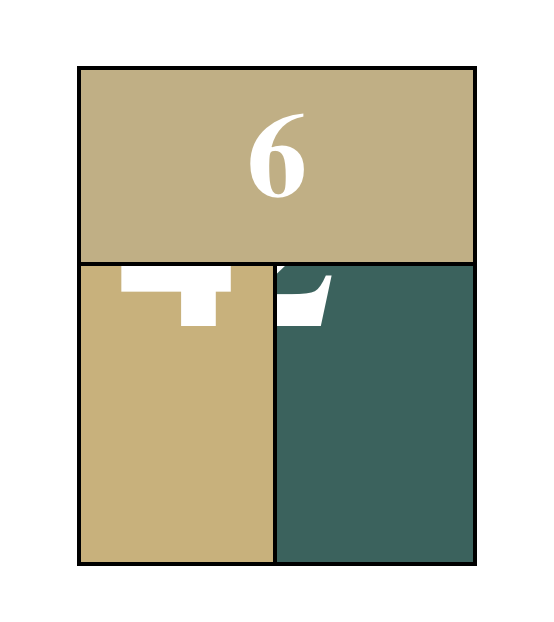
We have 6 sides and for easier recognizing each one each has a number on it. We make them bigger and give them a different background to distinguish them further.

.container {
  width: 300px;
  height: 300px;
  position: relative;
  margin: 0 auto 40px;
  padding-top: 100px;
}

#cuboid {
  width: 100%;
  height: 100%;
  position: absolute;
}

#cuboid div {
  display: block;
  position: absolute;
  border: 2px solid black;
  line-height: 196px;
  font-size: 120px;
  font-weight: bold;
  color: white;
  text-align: center;
}

Until now we didn’t use any 3D transformations. For ordering the sides we rotate and translate each side in its place.

    #cuboid .front  { transform: translateZ(100px); }
    #cuboid .back   { transform: rotateX(-180deg) translateZ(0px); }
    #cuboid .right  { transform: rotateY(90deg) translateZ(150px) translateX(-50px); }
    #cuboid .left   { transform: rotateY(-90deg) translateZ(50px) translateX(50px); }
    #cuboid .top    { transform: rotateX(90deg) translateZ(50px) translateY(50px); }
    #cuboid .bottom { transform: rotateX(-90deg) translateZ(200px) translateY(-50px); }

This brought the back side on top but no 3D visible yet. Further we tell the browser to use 3d on its children and move the scene a bit out.

#cuboid {
  transform-style: preserve-3d;
  transform: translateZ( -100px );
}

Still we are trapped in flatland. Ah we are looking straight onto the front. So we rotate the scene.

#cuboid {
  transform-style: preserve-3d;
  transform: translateZ( -100px ) rotateX(20deg) rotateY(20deg);
}

Now we have depth. Something is quite not right. If we remember one thing from our OpenGL days we need another ingredient to make it look 3D: a perspective.

.container {
  perspective: 1200px;
}

Last but not least we add animation to see it spinning.

#cuboid {
  transform-style: preserve-3d;
  transform: translateZ(-100px) rotateX(20deg) rotateY(20deg);
  animation: spinCuboid 5s infinite ease-out;
}
@keyframes spinCuboid {
  0% { transform: translateZ(-100px) rotateX(0deg) rotateY(0deg); }
  100% { transform: translateZ(-100px) rotateX(360deg) rotateY(360deg); }
}

The Great Rational Explosion

A Dream to good to be true

A few years back I was doing mostly computational geometry for a while. In that field, floating point errors are often of great concern. Some algorithms will simply crash or fail when it’s not taken into account. Back then, the idea of doing all the required math using rationals seemed very alluring.
For the uninitiated: a good rational type based on two integers, a numerator and a denominator allows you to perform the basic math operations of addition, subtraction, multiplication and division without any loss of precision. Doing all the math without any loss of precision, without fuzzy comparisons, without imperfection.
Alas, I didn’t have a good rational type available at the time, so the thought remained in the realm of ideas.

A Dream come true?

Fast forward a couple of years to just two months ago. We were starting a new project and set ourselves the requirement of not introducing floating point errors. Naturally, I immediately thought of using rationals. That project is written in java and already using jscience, which happens to have a nice Rational type. I expected the whole thing to be a bit slower than math using build-in types. But not like this.
It seemed like a part that was averaging about 2000 “count rate” rationals was extremely slow. It seemed to take about 13 seconds, which we thought was way too much. Curiously, the problem never appeared when the count rate was zero. Knowing a little about the internal workings of rational, I quickly suspected the summation to be the culprit. But the code was doing a few other things to, so naturally my colleagues demanded proof that that was indeed the problem. Hence I wrote a small demo application to benchmark the problem.

The code that I measured was this:

Rational sum = Rational.ZERO;
for (final Rational each : list) {
    sum = sum.plus(each);
}
return sum;

Of course I needed some test data, that I generated like this:

final List<Rational> list = new ArrayList<>();
for (int i=0; i<2000; ++i) {
    list.add(Rational.valueOf(i, 100));
}
return list;

This took about 10ms. Bad, but not 13s catastrophic.

Now from using rational numbers in school, we remember that summing up numbers with equal denominators is actually quite easy. You just leave the denominator as is and add the two numerators. But what if the denominators are different? We need to find a common multiple of the two denominators before we can add. Usually we want the smallest such number, which is called the lowest common multiple (lcm). This is so that the numbers don’t just explode, i.e. get larger and larger with each addition. The algorithm to find this is to just multiply the two numbers and divide by their greatest common divisor (gcd). Whenever I held the debugger during my performance problems, I’d see the thread in a function called gcd. The standard algorithm to determine the gcd is the Euclidean Algorithm. I’m not sure if jscience uses it, but I suspect it does. Either way, it successively reduces the problem via a division to a smaller instance.

What does this all mean?

This means that much of the complexity involved happens only when there’s variation in the denominator. Looking at my actual data, I saw that this was the case for our problem. The numbers were actually close to one, but with the numerator and the denominator each close to about 4 million. This happened because the counts that we based this data on where “normalized” by a time value that was close, but not equal to one. So let’s try another input sequence:

final Random randomGenerator = new Random();
final List<Rational> list = new ArrayList<>();
for (int i=0; i<2000; ++i) {
    list.add(Rational.valueOf(4000000, 4000000 + randomGenerator.nextInt(2000)));
}
return list;

That already takes 10 seconds. Wow. Here’s the rational number it produced:

10925412090387826443356493315570970692092187751160448231723307006165619476894539076955047153673774291312083131288405937659569868481689058438177131164590263653191192222748118270107450103646129518975243330010671567374030224485257527751326361244902048868408897125206116588469496776748796898821150386049548562755608855373511995533133184126260366718312701383461146530915166140229600694518624868861494033238710785848962470254060147575168902699542775933072824986578365798070786548027487694989976141979982648898126987958081197552914965070718213744773755869969060335112209538431594197330895961595759802183116845875558763156976148877035872955887060171489805289872602037240200456259054999832744341644730504414071499368916837445036074038038173507351044919790626190261603929855676606292397018669058312742095714513746321779160111694908027299104638873374887446030780299702571350702255334922413606738293755688345624599836921568658488773148103958376515598663301740183540590772327963247869780883754669368812549202207109506869618137936835948373483789482539362351437914427056800252076700923528652746231774096814984445889899312297224641143778818898785578577803614153163690077765243456672395185549445788345311588933624794815847867376081561699024148931189645066379838249345071569138582032485393376417849961802417752153599079098811674679320452369506913889063163196412025628880049939111987749980405089109506513898205693912239150357818383975619592689319025227977609104339564104111365559856023347326907967378614602690952506049069808017773270860885025279401943711778677651095917727518548067748519579391709794743138675921116461404265591335091759686389002112580445715713768865942326646771624461518371508718346301286775279265940739820780922411618115665915206028180761758701198283575402598963356532479352810604578392844754856057089349811569436655814012237637615544417676166890247526742765145909088354349593431829508073735508662766171346365854920116894738553593715805698326801840647472004571022201012455368883190600587502030947401749733901881425019359516340993849314997522931836068574283213181677667615770392454157899894789963788314779707393082602321025304730355204512687710695657016587562258289968709342507303760359107314805479150337790244385189611378805094282650120553138575380568150214510972734241803176908917697662914714188030879994734853772797322420241420911735874903926141598416992690859929943631826094723456317312589265104334870907579391696178556354299428366394819280011410287891113591176612795009226826412471238783334239148961082442565804292473501012401378940718084589859443350905260282342990350362981901637062679381912861429756544396701574099199222399937752826106312708211791773562169940745686837853342547182813438086856565980815543626740277913678365142830117575847966404149038892476111835346566933160119385992791677587359063277202990220629004309670865867774206252830200897207368966439730136012024728717701204793182480513620275549665094200202565592742030772102704751736850897665353297536494739059325582661212315355306787427752670613324951121097833683795311514392922347268374097451268196257308005629903372871471809591087849716533132440301432155867780938535327925645340832637372702171777123816397448399703780105396941226655424025197472384099218081468916864256472238808237005121132164363385877692234230678011184351921814453560033879491735351402997266882544304106997065987376103362395437737475217181551336569975031721614790499945872209261769951117223344186839969922893394319287462384028859822057955389124951467203432571737865201780344423642467187208636881135573636815083891626138564337634176587161231028307776960866522346008589607259041199676560090157817882260300414906572885890188984036234226505815367029839231023461597364977306399898603903392434756572392816540125771578189640871020070756539777101197151773304409519870643142190955018579914630314940373832858007535828153361236115553577694543503842444481599944319287815162136101362705211937257383677282014480487759786222801447548899760241829116959865698836386442016721709983097509675552750221989521551169512674725876581185837611167980363615880958917421251873901289922888492447507837290336628975165062036681599909052030653421736716061426079882106810502703095803882805916960831442634085856041781093664688754713907512226706324967656091109936101526173370212867073380662492009726657437921033740063367290862521594119329592938626114166263957511012256023777676569002181500977475083845756500926631153405264250959378833667206532373995888322137324027620266863005721216133252342921697663864807284554205674829658250755046340838031118227643145562001361542532622713886266813492926885236832665609571019479812713355021295737820773552735161701716018010606040731647943600206193923458996150345093898644748170519757957470535978378479854546255651200511536560142431948781377187548218601919108870420102025378751015728281345799655926856602543107729659372984539588835599345223921737022220676709028150797109091782506736145801340069563865839397272145141831011878720095142353543406658905222847479419799336972983678887227301846161770296173667855239714987183774931791306562351516152727523242208973614372214119191610954209164193665209038399568256186789865817560942946289864468805486432823029457193832616134050058472575/5464071367689021145920376789564097484075057036929154325361292811121525852598101325663975897893163034606703637232625465056851133763148192531586105963101428155647567490545647427502233159652310898001125892675829093187577533366895512701590739143174316498475076791171065480136546725008720643752948237443019242161669077663609144434306128221503414531394096823915215979623953337930493605186601571769495144894636986997575880131117237208510857818613219593393080298986414277944012186244301930294333213815805316754678940597177696108355782072853392533822105101007621252067159549391148948251225551745385134586065334994558336331772298542454065874623247283672363609435360051294428160464673413148011783297358303182389731822629550376618544475198010869325105825675331154332311829064320240772190873197445422806128724029723364642376469088090535867746031708415054086042362900835830071439066729248803080864979591431807735444694059982355674331452510436222691302473693502522151731546119758216043039918795122874474779117841250524168339597048231340441394931963429195108468364711206679388129543777587115734312812004999951805288552516345754609724336541283126925634054615621607387407977448299658305191245949844785795188192329587881827885708672142850022336110188979606923986247270824545988992712993364088907981140326036171066083995899655482025878782401213185589085533281898090985040136079388970812804900747496605542168328539571899508434943602485570225905907644120282314027462195035830426406664327228058856521800556952281791943493734276488880843046612364784975328644388569123725347247071532065625240062618476483177429385912626131806870421725932016173249912942914992853735756415323674217279068679145528740177762103447741638280753518805769821177202801618302946904761889981101239141113424330262556585926281757788049928339119700279137278143586150134536970549327847433827708642630282821305576285238510965599311560018270085653975154329160951814845203648945184348538132528313719965960517692615234724933839415863834082163365616979319651204331888160659534780756175312928937580725581177783203569550625979825708835192412739747467314045215372710237518236109496682610777837094944201522879675742349874447002866525687741559327659019423524782141050034563799707395461801978917300210616390761873065433809737256362778865972956861423012424858347791919074000867019988914246185988825680768363450694954357708832975385526022445613099402197649574980990392753660371969220370462447697883319180076033708570759874351259644698980354866068784429511482751711329624930863629304545443308117342612677534958727764219861540475648492451312505519760969766401341016292089564143516344584197883268917604454917829927706134205489288603918892893943815239131020894621190795863599245502858307692284626604530452680973144088318876770254624083735638792267234407991769552946582638360068875509975769002847311018204789400549401560376453753063628076240879327047662612561558831502017122298425734701863181656884664851026481979959368508273072349808416302081774935491159815938813047108294310775621375475681754627108394755080076400344634873409823122370888409229666662703837096634538759103222727447751640114800586463155863216558367921497862783396136480309101772689723377535772396361300263399246855706948606216922101060308941294672554277063185792769730719177469014803853068307966008447841184403910224016078072279882935920347299431580783664128991812654780457701135185591782941754395263461459180940761928488860853515685525983743168631933069310771834569879795160576216776499263300025539821575767674288253419696114910586812284230709422230558006531335540918025940397918186306383352682903150594714754889631368556569576312855831657674738769087018659290558967429709446878600756119596020561987088170551193295467295484037656684414413021143993266548616775075905905925334335921152629477697210074629622902141063078657746149232034056642352265941452947845339051610301151130368316362022636711499114826671695540416257477345744126416363795225938900727969092692270788643742709421442552812735921534532156766228688341300473140115855278302077136595142902548557943030527129378779996403263450119984758775332533036452077654603781557033976641416371186050927154435643492983848051087282942559503555223474754690693742997370592039106889187781827888290578576160100274561900208861136548215743616634615083974725330617020874519606610812580339985836584711397102753448160446984238925180319975660479580098047098930179253806342651446549086560273369490291496196263969077175524002077318170194252067818804991902015489300563029607689935067689448990111925784018672159126316019672778424331051001652240822592173809393561688768265941132515679297537471384753992855568256114701369550476003237008840508060572457453896791033992685192069703595482787771374051189250065726225137532026227150630791972777126392521002221370419505711150022179216266239656298115575018443700688208844387102582445812545858014862427316785193110884751319467750425511273629581416588296942433219322216784262821066075700266485645060935996743388485096744598169509920624971167075214788838073469621687619355816573640360338756385397428237445511332615921133308459043700086925442114337299109227541364012352140312577797531234832237279430947774637533319353713938562360646441591033255036

I kid you not, that’s over 10000 digits! In the editor I’m writing this in, that’s roughly 3 pages. No wonder it took that long. Let’s use even more variation in the numbers:

final Random randomGenerator = new Random();
final List<Rational> list = new ArrayList<>();
for (int i=0; i<2000; ++i) {
    list.add(Rational.valueOf(4000000 + randomGenerator.nextInt(5000),
            4000000 + randomGenerator.nextInt(20000)));
}

Now that already takes 16 s, with about 14000 digits. Oh boy. Now the maximum number of values I expected to do this averaging for was about 4000, so let’s scale that up:

final Random randomGenerator = new Random();
final List<Rational> list = new ArrayList<>();
for (int i=0; i<4000; ++i) {
    list.add(Rational.valueOf(4000000 + randomGenerator.nextInt(5000),
            4000000 + randomGenerator.nextInt(20000)));
}
return list;

That took 77 seconds! More than 4 times as long as for half the amount of data. The resulting number has over 26000 digits. Obviously, this scales way worse than linear.

An Explanation

By now it was pretty clear what was happening: The ever so slightly not-1 values were causing an “explosion” in the denominator after all. When two denominators are coprime, i.e. their greatest common divisor is 1, the length of the denominators just adds up. The effect also happens when the gcd is very small, such as 2 or 3. This can happen quite a lot with huge numbers in a sufficiently large range. So when things go bad for your input data, the length of the denominator just keeps growing linearly with the number of input values, making each successive addition slower and slower. Your rationals just exploded.

Conclusion

After this, it became apparent that using rationals was not a great idea after all. You should be very careful when doing series of additions with them. Ironically, we were throwing away all the precision anyways before presenting the number to a user. There’s no way for anyone to grok a 26000 digit number anyways, especially if the result is basically 4000.xx. I learned my lesson and buried the dream of perfect arithmetic. I’m now using fixed point arithmetic instead.

Platform independent development with .NET

We develop most of our projects as platform independent applications, usually running under Windows, Mac and Linux. There are exceptions, for example when it is required to communicate with special hardware drivers or third-party libraries or other components that are not available on all platforms. But even then we isolate these parts into interchangeable modules that can be operated either in a simulated mode or with the real thing. The simulated modes are platform independent. Developers usually can work on the code base using their favorite operating system. Of course, it has to be tested on the target platform(s) that the application will run on in the end.

Platform independent development is both a matter of technology choices and programming practices. Concerning the technology the ecosystem based on the Java VM is a proven choice for platform independent development. We have developed many projects in Java and other JVM based languages. All of our developers are polyglots and we are able to develop software with a wide variety of programming languages.

The .NET ecosystem

Until recently the .NET platform has been known to be mainly a Microsoft Windows based ecosystem. The Mono project was started by non-Microsoft developers to provide an open source implementation of .NET for other operating systems, but it never had the same status as Microsoft’s official .NET on Windows.

However, recently Microsoft has changed course: They open sourced their .NET implementation and are porting it to other platforms. They acquired Xamarin, the company behind the Mono project, and they are releasing developer tools such as IDEs for non-Windows platforms.

IDEs for non-Windows platforms

If you want to develop a .NET project on a platform other than Windows you now have several choices for an IDE:

I am currently using JetBrains Rider on a Mac to develop a .NET based application in C#. Since I have used other JetBrains products before it feels very familiar. Xamarin Studio, MonoDevelop, VS for Mac and JetBrains Rider all support the solution and project file format of the original Visual Studio for Windows. This means a .NET project can be developed with any of these IDEs.

Web applications

The .NET application I am developing is based on Web technologies. The server side uses the NancyFX web framework, the client side uses React. Persistence is done with Microsoft’s Entity Framework. All the libraries I need for the project like NancyFX, the Entity Framework, a PostgreSQL driver, JSON.NET, NLog, NUnit, etc. work on non-Windows platforms without any problems.

Conclusion

Development of .NET applications is no longer limited to the Windows platform. Microsoft is actively opening up their development platform for other operating systems.

Self-contained projects in python

An important concept for us is the notion of self-containment. For a project in development this means you find everything you need to develop and run the software directly in the one repository you check out/clone. For practical reasons we most of the time omit the IDE and the basic runtime like Java JDK or the Python interpreter. If you have these installed you are good to go in seconds.

What does this mean in general?

Usually this means putting all your dependencies either in source or object form (dll, jar etc.) directly in a directory of your project repository. This mostly rules out dependency managers like maven. Another not as obvious point is to have hardware dependencies mocked out in some way so your software runs without potentially unavailable hardware attached. The same is true for software services somewhere on the net that may be unavailable, like a payment service for example.

How to do it for Python

For Python projects this means not simply installing you dependencies using the linux package manager, system-wide pip or other dependency management tools but using a virtual environment. Virtual environments are isolated Python environments using an available, but defined Python interpreter on the system. They can be created by the tool virtualenv or since Python 3.3 the included tool venv. You can install you dependencies into this environment e.g. using pip which itself is part of the virtualenv. Preparing a virtual env for your project can be done using a simple shell script like this:

python2.7 ~/my_project/vendor/virtualenv-15.1.0/virtualenv.py ~/my_project_env
source ~/my_project_env/bin/activate
pip install ~/my_project/vendor/setuptools_scm-1.15.0.tar.gz
pip install ~/my_project/vendor/six-1.10.0.tar.gz
...

Your dependencies including virtualenv (for Python installations < 3.3) are stored into the projects source code repository. We usually call the directory vendor or similar.

As a side note working with such a virtual env even remotely work like charm in the PyCharm IDE by selecting the Python interpreter of the virtual env. It correctly shows all installed dependencies and all the IDE support for code completion and imports works as expected:

python-interpreter-settings

What you get

With such a setup you gain some advantages missing in many other approaches:

  • No problems if the target machine has no internet access. This would be problematic to classical pip/maven/etc. approaches.
  • Mostly hassle free development and deployment. No more “downloading the internet” feeling or driver/hardware installation issues for the developer. A deployment is in the most simple cases as easy as a copy/rsync.
  • Only minimal requirements to the base installation of developer, build, deployment or other target machines.
  • Perfectly reproducable builds and tests in isolation. You continuous integration (CI) machine is just another target machine.

What it costs

There are costs of this approach of course but in our experience the benefits outweigh them by a great extent. Nevertheless I want to mention some downsides:

  • Less tool support for managing the dependencies, especially if your are used to maven and friends and happen to like them. Pip can work with local archives just fine but updating is a bit of manual work.
  • Storing (binary) dependencies in your repository increases the checkout size. Nowadays disk space and local network speeds make mostly irrelevant, especially in combination with git. Shallow-clones can further mitigate the problem.
  • You may need to put in some effort for implementing mocks for your hardware or third-party software services and a mechanism for switching between simulation and the real stuff.

Conclusion

We have been using self-containment to great success in varying environments. Usually, both developers and clients are impressed by the ease of development and/or installation using this approach regardless if the project is in Java, C++, Python or something else.

What UX and sales have in common

In the past sales has often been disregarded. But modern sales is more like UX. The goal of modern sales is to bring a positive impact to both the seller and the buyer. This is called a win-win.

In the past sales has often been disregarded. But modern sales is more like UX. The goal of modern sales is to bring a positive impact to both the seller and the buyer. This is called a win-win. Both parties win.
Shortcuts or favors result in one party losing which is not a sustainable strategy.
For the buying to be winning a seller has to care about the needs of the buyer. These needs range from jobs to be done to personal ones. As a seller you employ UX research methods like interviews and open questions targeting the thoughts and feelings of the buyer. The wins are always personal never something abstract like a company strategy or even KPIs. But: the wins are based upon result: measurable, objective things like conversion rates, efficiency improvements, closed sales. Together they are called win-results: an objective metric that has a personal benefit for the buyer.

Assumptions in UX can be dangerous and can doom a whole product. Assuming win-results or the wrong needs you can miss the buyer completely and lose the sale. In strategic sales every uncertain or missing information or contact is regarded as a red flag. UX should also mark its blind spots. The product kata is a great way to eliminate assumptions in a project.

But even if you know the needs you have to take into account the context. The personal and emotional situation a buyer is in has direct consequences for how you need to address him. The same with UX where context and the job to be done control your solutions – what works and what not.

If you are interested in a more person centered sales strategy I recommend reading strategic selling and following blogs like Seth Godin and Bernadette Jiwa

Recap of the Schneide Dev Brunch 2017-02-12

If you couldn’t attend the Schneide Dev Brunch at 12th of February 2017, here is a summary of the main topics.

brunch64-borderedYesterday at sunday, we held another Schneide Dev Brunch, a regular brunch on the second sunday of every other (even) month, only that all attendees want to talk about software development and various other topics. This brunch was a little smaller in numbers of attendents, but very interesting nonetheless. As usual, the main theme was that if you bring a software-related topic along with your food, everyone has something to share. Because we were very invested in our topics, we established an agenda for the event. As usual, a lot of topics and chatter were exchanged. This recapitulation tries to highlight the main topics of the brunch, but cannot reiterate everything that was spoken. If you were there, you probably find this list inconclusive:

Household roboters

We started our brunch talk by mentioning the services our five years old roombas provide for us, especially keeping the floor free of any small things. The biggest effect when having an electronic pet like a roomba is that you learn to keep your things above ground, especially cords with expensive electronics on the other end. The continuous elimination of dust is just a positive bonus on top of your behaviour adjustment. You keep the floor tidy, the roomba just mercilessly enforces this rule.

Today, there are many alternatives to the original roomba and most have really nice features and abilities. So no matter what brand you buy, you’ll get a capable floor police.

Code Review priorities

In our recent dev brunches, we talked about code review tools and code review habits. This time, we talked about code review priorities and the sorry state we are still in with current tools. We worked out that its nearly useless to only show the diff with a few lines of surrounding code and expect a thorough review. Even the concept of “changed files” is rather distracting in an object-oriented language. But even the current tools are only as good as we make use of them.

The first priority of code reviews should be finding and eliminating bugs – “real” bugs that would have had surfaced in production otherwise and “hypothetical” bugs that could have shown up in production. This means that code review is in its core an activity for the user of the software. Only second priority is the understandibility of the source code. If the reviewer doesn’t understand the code, chances are high that nobody will, including the author in a few weeks or months. Cleaning up the code now mitigates the problem for the lowest possible cost because the “hurdle of understanding” isn’t raised yet. A code review should never work on the level of linters and should not address topics that can be checked by an automatic tool. Suggestions about refactorings should be kept to a minimum because they may serve no purpose if the code isn’t touched again. Refactor when the code is opened for the second edit, not on the first review. Review the code on the semantic level, not on the syntactic.

And keep in mind that code review tend to be used for conditioning remarks (“don’t do that”, “this is ugly”, “I don’t approve”, etc.). Try to avoid conditioning and strive to provide educational comments (“if you change this to that, then you’ll profit from this benefit”, “here’s a suggestion for a better approach and here’s why it is better”, etc.). But we also discussed that at this point, the code review remarks are probably better said in a pair programming session.

Code reviews are a powerful tool for development teams, but with power comes danger. Hopefully, we get adequate software tools to help us avoid the common traps soon.

Time management

Out of interest, we talked about some principles and practices to better manage one’s time.

The first thing to be aware of are the two fundamentally different schedules of management and development. The manager’s schedule is clocked in 30 minute intervals and driven by outside demand (meaning that a manager idles when not requested), while the maker’s schedule works with 4-hour blocks of uninterrupted, deeply concentrated work. You can probably see the problems that arise when somebody in a maker cycle is interrupted multiple times as if he was in a manager cycle. The first thing you can do is to announce your maker cycles (by clear “busy right now” indicators like headphones or a “do not disturb” sign) or announce your manager cycles much to the effect of consultation hours. Let your disturber know if he can disturb safely or if even the question causes damage.

Another important thing is to arrange your surrounding according to your schedule. Your schedule is so important that you should choose your service providers according to it. For example, if you work full time, look for hairdressers that work saturdays or dentists that offer appointments in the night. If you need to contact people for personal matters during work hours, allocate a specific timebox each day or at one day in the week and do it then. Announce this timebox to everybody who might want to contact you during work. This way, to can differentiate people that respect your (announced!) schedule and people that don’t. Depending on your rigorousness, you can cut the people that harm your schedule out of your life.

Work only with people who value your expectations (if reasonable). If you give a task to somebody, let’s say a craftsman, and state the deadline, you need to be sure the deadline is met without you checking or the craftsman will report back in time. Don’t give tasks to people who leave you in the lurch.

It all boils down to keep the control about your calendar. Whenever you give somebody else the opportunity to “conquer” a slice of your available time at their convenience, you increase your own inconvenience.

Karlsruhe C++ User Group

The year 2017 started with a new-founded C++ user group in karlsruhe that started with great events. David, the organisator of the user group is a regular attendee at our Dev Brunch and reported about his experiences with the boot process of the user group. He found a sponsor in the Clausmark GmbH and accompanied the monthly talks and programming events with a regular table that provides a similar format as our Dev Brunch, just in the night and not in the morning. We also talked about possible future content, and found code-centric “git guided live casts” a worthwhile format. Another format, the excellent code retreats are a great way to learn from others, but require a full day and not just two hours in the evening. The Game of Life kata is really fun, even when done repeatedly. Once you discover the solution in APL, you’ll want a special APL keyboard, too.

We are looking forward to hear great talks and meet cool people at the C++ user group Karlsruhe.

Sales knowledge

Our last topic in the bonus time (we were lenient with our scheduled time box, it’s sunday!) was about sales and the installation of sales knowledge and sales behaviour in a group of developers. We agreed that starting with Strategic Selling is a good choice because the process/framework is compatible with established developer culture and effective in its results. The resulting shift in the perception of occurrences is immediate and powerful. Strategic Selling is a rather old sales process that share some similarities with Solution Selling, another nerd-friendly process for complex business-to-business (B2B) sales.

Epilogue

As usual, the Dev Brunch contained a lot more chatter and talk than listed here. The number of attendees makes for an unique experience every time. We are looking forward to the next Dev Brunch at the Softwareschneiderei in April. We even have some topics already on the agenda (like a report about first-hand experiences with the programming language Rust and a discussion about the concept of provisioning). And as always, we are open for guests and future regulars. Just drop us a notice and we’ll invite you over next time.

Integration Tests with CherryPy and requests

CherryPy is a great way to write simple http backends, but there is a part of it that I do not like very much. While there is a documented way of setting up integration tests, it did not work well for me for a couple of reasons. Mostly, I found it hard to integrate with the rest of the test suite, which was using unittest and not py.test. Failing tests would apparently “hang” when launched from the PyCharm test explorer. It turned out the tests were getting stuck in interactive mode for failing assertions, a setting which can be turned off by an environment variable. Also, the “requests” looked kind of cumbersome. So I figured out how to do the tests with the fantastic requests library instead, which also allowed me to keep using unittest and have them run beautifully from within my test explorer.

The key is to start the CherryPy server for the tests in the background and gracefully shut it down once a test is finished. This can be done quite beautifully with the contextmanager decorator:

from contextlib import contextmanager

@contextmanager
def run_server():
    cherrypy.engine.start()
    cherrypy.engine.wait(cherrypy.engine.states.STARTED)
    yield
    cherrypy.engine.exit()
    cherrypy.engine.block()

This allows us to conviniently wrap the code that does requests to the server. The first part initiates the CherryPy start-up and then waits until that has completed. The yield is where the requests happen later. After that, we initiate a shut-down and block until that has completed.

Similar to the “official way”, let’s suppose we want to test a simple “echo” Application that simply feeds a request back at the user:

class Echo(object):
    @cherrypy.expose
    def echo(self, message):
        return message

Now we can write a test with whatever framework we want to use:

class TestEcho(unittest.TestCase):
    def test_echo(self):
        cherrypy.tree.mount(Echo())
        with run_server():
            url = "http://127.0.0.1:8080/echo"
            params = {'message': 'secret'}
            r = requests.get(url, params=params)
            self.assertEqual(r.status_code, 200)
            self.assertEqual(r.content, "secret")

Now that feels a lot nicer than the official test API!

Discount UX

Creating a better user experience does not need to be expensive, you don’t need fancy tools like eye tracking or facial expression detection to make a difference. Here are some tools I use to get a better understanding of what users need.

Creating a better user experience does not need to be expensive, you don’t need fancy tools like eye tracking or facial expression detection to make a difference. Here are some tools I use to get a better understanding of what users need.

Sketching

The universal tool to communicate besides words are sketches. Whether I draw an idea for a user interface, use a state diagram to discuss transitions or draw boxes and arrows to show connections, sketches at the heart of everyday working and thinking. What you need for this? Paper and a pencil.

Observation

In order to understand a human using your system you not only need to talk to him but you have to observe him doing his work. This is not just playing the fly on the wall. These sessions are interactive in nature, resulting in a back and forth. The user shows you how he works, you ask questions, he goes into more detail, you wonder about certain points, he explain his reasoning (or sometimes has wonders himself). Again paper and pencil is great. Having the option to take screenshots or (permission provided) a photo is even better. The most crucial is an open mind. You need to go in with a beginner’s mind: do not assume anything and wonder about almost everything.

Card sort

Observation is a pretty direct way to learn about the user doing his work. But even then some part of the mental model is hidden. To dig deeper into what kind of concepts and words he uses and how these are interrelated, a card sorting session can be helpful. Together with him we draw those words onto cards and let him sort them into groups and give them priorities. Here often discussions arise about the exact words you write on the paper. Some words need to be in more than one group, two different words mean the same, another word means something different in a different context. Here you also can take a glimpse at (sub-)domain bounds. Again cards, a pencil and paper to take notes is all you need.

Design studio or crazy 8

Sketching is so helpful you can do it even in a group. If you need to brainstorm for a user interface you take a sheet of paper and divide into 8 sections. Then you draw 8 very simple sketchy version of the UI in 8 – 16 minutes. After that you evaluate them in the group against your goals. The first round produces divergent sketches after seeing each other drawings, you will see that the next round converges into a common direction. You probably guessed it already: paper and a pencil is all you need.

Paper Journey Mapping

The last one in this group is more of an analyzing and communicating results tool. A journey map is a way to show the user (his thoughts, feelings and actions) along the steps he takes in his daily work. This map can highlight different aspects of your findings: the many applications he has to use to get his job done, the critical parts which mostly affect his mood, the frustrations, the many points for failure, the different people involved and so on. A large (DIN A3 or bigger) piece of paper is helpful and different colors of pencils help to highlight aspects.

Summary

All these methods use (almost only) pen and paper but are very helpful in getting to a better user understanding and therefore a better user experience. What are your tools for understanding?
If you have any questions or need more details please feel free to comment. I am at the starting point of the user experience journey and like to learn from others.

Evolvability of Code: Uniform Access Principle

Most programmers like freedom. So there are many means of hiding implementations in modern programming languages, e.g. interfaces in Java, header files in C/C++ and visibility modifiers like private and protected in most object-oriented languages. Even your ordinary functions or public class interface gives you the freedom to change the implementation without needing to touch the clients. Evolvability in this sense means you can change and refine your implementations without requiring others, namely clients of your code, to change.

Changing the class interface or function signatures within a project is often possible and feasible, at least if you have access to all client code and use powerful refactoring tools. If you published your code as a library or do not want to break all client code or forcing them to adapt to your changes you have to consider your interface code to be fixed. This takes away some of your precious freedom. So you have to design your interfaces carefully with evolability in mind.

Some programming languages implement the uniform access principle (UAP) that eases evolvability in that it allows you to migrate from public attributes to properties/method calls without changing the clients: Read and write access to the attribute uses the same syntax as invoking corresponding methods. For clarification an example in Python where you may start with a class like:

class Person(object):
  def __init__(self, name, age):
    self.name = name
    self.age = age

Using the above class is trivial as follows

>>> pete = Person("pete", 32)
>>> print pete.age
32
# a year has passed
>>> pete.age = 33
>>> print pete.age
33

Now if the age is not a plain value anymore but needs checking, like always being greater zero or is calculated based on some calendar you can turn it to a property like so:

class Person(object):
  def __init__(self, name, age):
    self.name = name
    self._age = age

  @property
  def age(self):
    return self._age

  @age.setter
  def age(self, new_age):
    if new_age < 0:
      raise ValueError("Age under 0 is not possible")
    self._age = new_age

Now the nice thing is: The above client code still works without changes!

Scala uses a similar and quite concise mechanism for implementing the UAP wheres .NET provides some special syntax for properties but still migration from public fields easily possible.

So in languages supporting the UAP you can start really simple with public attributes holding the plain value without worrying about some potential future. If you later need more sophisticated stuff like caching, computation of the value, validation or even remote retrieval you can add it using language features without touching or bothering clients.

Unfortunately some powerful and widespread languages like Java and C++ lack support for UAP. Changing a public field to a more complex property means the introduction of getter and setter methods and changing all clients. Therefore you see, especially in Java, many data classes littered with trivial getter and setter pairs doing nothing interesting and introducing unnecessary bloat to maintain the evolvability of the code.

The Four Steps of Complex Tasks (Part II)

Trying to succeed in a complex task without solid experience is a challenging endeavour. A simple framework with four steps can help you with it.

In the first part of this blog entry, we talked about how complex tasks need to be addressed with a proper problem-solving framework. One such mental framework can be found in traditional warfare. It involves all the anticipated artifacts like headquarters, mission statements and a general’s map, but will likely omit the gruesome parts of actual battle.

We started with the mission statement and then began to make a plan with four steps:

  • Reconnaissance
  • Maneuver
  • Offensive
  • Defensive

Step one: Reconnaissance

In the first step, we tried to unveil every part of the scenario and draw a complete map of the terrain. A botched reconnaissance is probably the root cause of most failed missions. You can read all the details about the reconnaissance step in the first part of this blog entry.

Step two: Maneuver

Emergency preparation equipment on the grass, on the nature backgroundFor a real army, maneuvering means to “change position”. In preparation of a battle, it means to secure the positions that will maximize the own effect and/or minimize the effect of the opponent. Most battles are already decided in this phase, with the following fighting being more or less the playback of the drama the generals anticipated. The ultimate victory in military warfare is the victory by maneuver, when the opponent revises his position before the battle and concedes that he lost already.

In our example case, we wage war on the call for proposals for a big software project. It would be our ultimate victory if we could convince the project owner that no call for proposals is even necessary because we are clearly the best-fitting proposer. But that would have required actions from our side in the past and that chance has passed. We need to prepare for the “fight” under the rules of the project owner, we need to submit a better proposal than everybody else.

Our maneuver step contains every preparative action we need to do so we can play out the last two steps in a smooth fashion. If we need to create an account to submit our proposal, then now is the time to create it. If we need to buy some office supplies to print the proposal in top-notch quality, we should buy them now. Just like a real army stocks their supplies near the anticipated battlefield, we need to stock our supplies, physical like the office supplies or virtual like the user account or a signing certificate.

The goal of maneuvering is to never stall when the last two steps are due. We take our knowledge from the reconnaissance step and interpolate it into the future. The maneuver actions support our scenario of the future. Once the third step is in progress, every negligence in maneuvering will mean delay, makeshift solutions and partial failure. If the negligence is too widespread, it will result in overall failure.

Step three: Offensive

Hiker crossing rocky terrain in the Bryce Canyon National Park, USAIn a real battle, once the maneuvering is done, things “get real”. This usually means that shots are fired. In our example, we also fire shots, but imaginative ones. During the offensive, we really work on the meat of the proposal. We dig into the details of the project and produce estimates and concepts. We use the mandated structure for the proposal to fill our proposition in. We concentrate on fabricating content.

In this phase, things get messy and confusing very fast. There are just way too many details needing attention all at once. This is where our plan from the reconnaissance step comes to our rescue. We need to make sure that we don’t stray from the plan too much. Remember, our “opponent” isn’t moving, it’s a static target. So our plan will stay mostly valid during the offensive. If not, this indicates flaws in previous steps and should be taken seriously. If you can afford it, time- or effortwise, rewind your mission back to step one if you find yourself attacking dummy problems or empty terrain that leads you nowhere. A well-planned offensive has immediate and visible effects.

Your work during the offensive phase might look chaotic and erratic from the outside, but it should be cold-blooded and calculated in your experience. This phase is known to intimidate you with overwhelming feelings of anxiety and despair. Stick to your plan and don’t panic! If you’ve planned it well, it will go well. If you didn’t trust your plans beforehands, why would you even proceed to this step? There is no damage done when your reconaissance unveils a task to heavy for your taste and you make an immediate retreat. There is little loss in surrendering your efforts to an opponent that played the maneuvering game better than you, like requiring several comparable projects as reference for the proposal, but you are a newcomer on the market. It will ache, but you cut your losses and move on. But starting an all-out offensive that you are not sure you’ll win? That’s just stupid or desperate.

Two remarks here: First, Being sure you’ll win means you are sure to fulfill your mission, in our example to submit a valid proposal. That doesn’t imply you need to be sure to win the pitch itself. Stick to your mission statement and win the battle before you try to win the whole war. Second, if you hold back on your offensive, you set yourself up for failure because of indecision and foot-dragging. Every offensive should be all-out or not started at all. You are in this game to win, not to play.

Step four: Defensive

Let’s assume our offensive was successful. In a real battle, we have conquered the enemy’s stronghold or additional terrain. The enemy is defeated. A movie would now show the end credits, a computer game the game results. But this is real life, there is no “end point”. Your troops are all over the place, probably in a sorry shape and without a clear goal to look forward to. If your enemy has any troops left, now is the best moment to run you over. Your victory would be pyrrhic, your winning would finally cause your defeat.

The clever strategist has already planned the defense after the offensive (and victory). Often, this means a partial retreat after the battle in order to “straighten the lines”. We can’t do that in our example, it would mean we take back promises after our proposal wins the pitch. But we can plan our defense after victory.

Let’s assume our proposal wins. What does that mean for our company? Who will work on the project? Can we keep our promises even if external circumstances like other projects, other proposals or our staff changes? What will we gain from the project? What concessions can we make to the customer if he wants to re-negociate? Do we need to re-negociate as soon as the agreement is made? The last question answered with yes is a typical sign of over-commitment in the offensive phase and tells about poor leadership.

In our example, let’s say we’ve promised the customer a 24/7 support hotline for the software. We need to make sure how to fulfill this promise before we send out our proposal. There is no value in making hollow promises that we cannot keep. This would be like losing captured terrain again just because you cannot provide enough troops to secure it. It’s not worth the effort and an all-around damper on morale. Just to be clear here: You don’t need to act on the fullfilling of the promises before you’ve won, but you cannot wait with the planning. So we need to have a clear plan on how to implement a 24/7 support hotline, but we only need to act on it as soon as we are sure it is really necessary. We need to take steps one and two for the support hotline mission, but hold back the later steps until our proposal has won and the contracts are signed.

Don’t omit this step in your planning. A successful offensive without the backing of a good defensive is the prelude to a disaster.

Conclusion

We’ve learnt the four steps to master each complex task, lent from the art of warfare, namely reconaissance, maneuver, offensive and defensive, that form a pattern you can repeat each time with the same structure, but always different content. Every task will require a different solution, but the solution’s framework is always the same. This framework can be applied to tasks that seem to have nothing in common with warfare, but still play by the same rules. This is a powerful tool because it opens centuries of knowledge in military warfare to your creative transfer approach. And it is an effective tool because you don’t need to study history to apply it to your cause. Just reiterate the four steps and conquer your task.

If you’ve already applied these four steps, perhaps without consciously realizing it, I would love to hear your story and the outcome. Please leave your comment below!